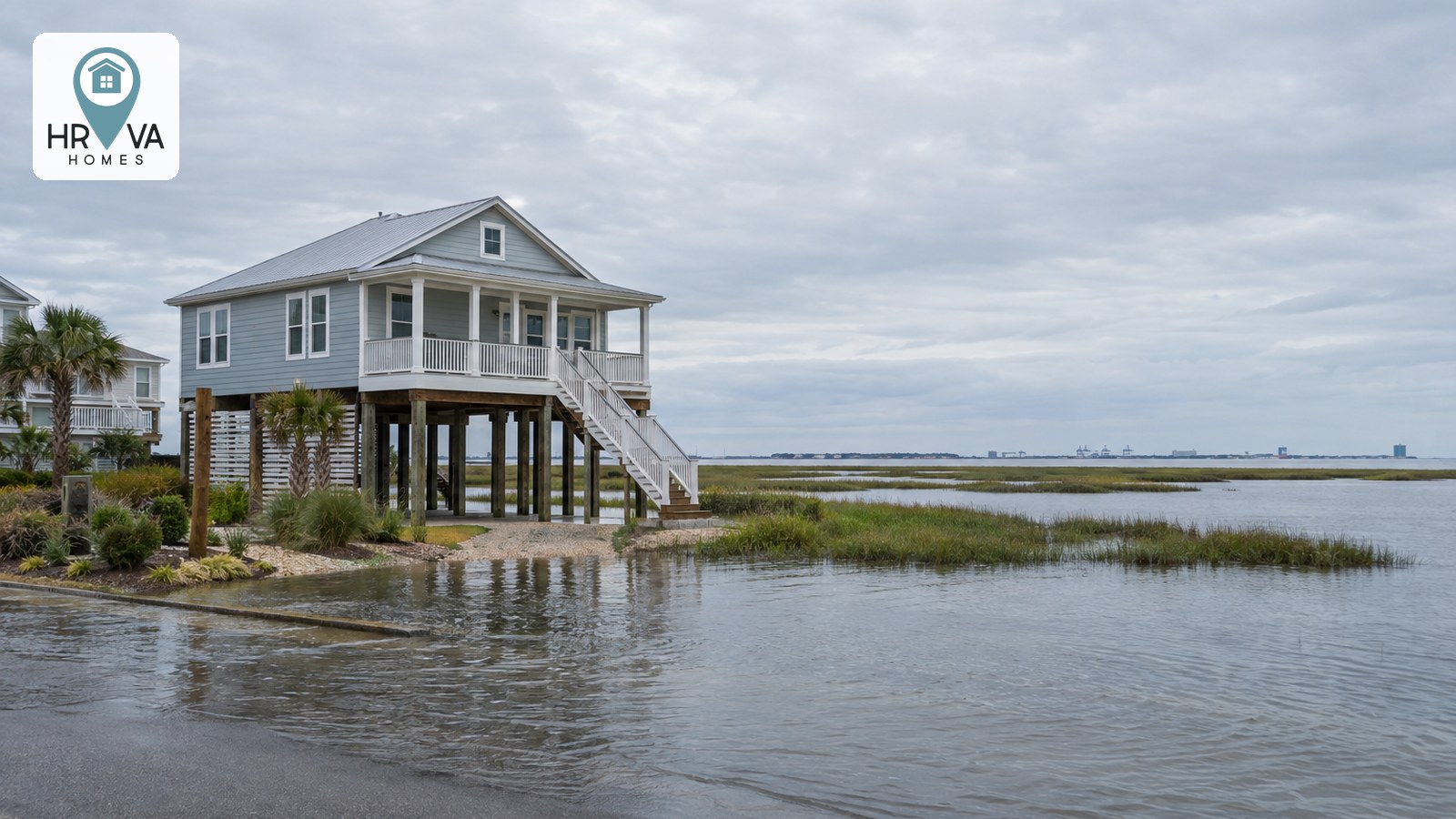
In short: A flood zone is an area FEMA maps by flood risk. Zones beginning with A or V (such as AE) are high-risk areas, and if a home there has a federally backed mortgage, flood insurance is required. Zone X is moderate-to-low risk, and insurance is optional but often a good idea in coastal Hampton Roads. Before buying or selling, check the property on FEMA's map or the City of Norfolk's flood zone tools, and get a flood insurance quote early.
Water is part of what makes Hampton Roads special, and part of what makes buying and selling here different. Whether you're buying in Larchmont or selling near the Lafayette River, flood zones should be on your checklist early.
What the flood zone letters mean
| Zone | Risk level | Flood insurance with a federally backed mortgage |
|---|---|---|
| A, AE, AH, AO, AR, A99 | High risk | Required |
| V, VE (coastal) | High risk with wave action | Required |
| X (shaded) | Moderate risk | Optional but recommended |
| X (unshaded) | Lower risk | Optional |
FEMA's maps show risk, not a guarantee. Plenty of flood claims come from homes outside high-risk zones.
How to check a property's flood zone
- Look up the address on FEMA's Flood Map Service Center.
- In Norfolk, use the city's flood zone resources, which are based on FEMA's Flood Insurance Rate Map.
- Ask the seller or listing agent about past flooding, insurance claims, and any elevation certificate.
- Get a flood insurance quote before your inspection period ends.
For buyers
- Budget for insurance early. Flood insurance can change your monthly payment, so get a quote before you make an offer, or at least before your contingency deadline.
- Ask for the elevation certificate. It can affect your premium.
- Look at the street, not just the house. Some neighborhoods see roads flood during king tides and storms even when homes stay dry.
- Ask about mitigation. Raised foundations, flood vents, and elevated mechanicals can lower risk and premiums.
For sellers
- Gather your documents. Elevation certificate, current flood insurance premium, and records of any mitigation work.
- Be upfront. Buyers will find the flood zone anyway. Sharing information early builds trust and keeps deals from falling apart.
- Highlight improvements. If you've raised the HVAC or added flood vents, make sure it's in your listing.
- Price with it in mind. Your agent should compare your home to sales with similar flood exposure.
Have questions about a specific property?
We help buyers and sellers across Norfolk and Virginia Beach work through flood zones every week. Reach out and we'll help you understand the risk and the costs before you commit.
Sources: FloodSmart (NFIP): What is my flood zone; City of Norfolk: Flood zones. Figures are for general information and can change; contact us for advice on your specific situation.
Frequently asked questions
It is required if the home is in a high-risk flood zone (such as A, AE, or V zones) and has a federally backed mortgage. In lower-risk Zone X areas, it is optional, but many coastal Hampton Roads homeowners carry it anyway.
Look up the address on FEMA's Flood Map Service Center or your city's flood zone tools, ask the seller for an elevation certificate and insurance history, and get a flood insurance quote during your inspection period.
They can. Flood insurance raises the cost of owning some homes, and some buyers avoid high-risk zones. Pricing a home against sales with similar flood exposure gives a more accurate value.
Have a Hampton Roads real estate question?
Our team answers questions like these every day. Reach out and we'll give you a straight answer.
Contact HRVA Homes